
Some weeks ago I accidentally changed data on senate.gov. At the time I didn't realize it, and only as I looked into what I found to be more and more bizarre firewall rules from a specific vendor did I realize just what I had done.
The breach that allowed me to do this involved an open production Elasticsearch database from the company Granicus, which was reported on here some weeks ago. Because this database stores and generates the metadata that is used to populate thousands of government video streaming sites, changing data on the database allowed one to say, change data on https://ift.tt/2FRlMj1.
At the time I wrote a small collection of posts about what I had found. I wish I had put more effort and thought into them, but I think they are decently well structured and the first can be found here. I want though now to look into the specific firewall rules that I mentioned above. They are of concern to people I think and find myself being able to sleep less and less the more and more I think of them.
Beginning:
Granicus is one of the largest provider of SaaS software to the US and UK governments. It has grown over the years extensively through acquisitions that have put it near the top of a small government software empire. From Drupal to the Emergency Alert System to various niche SaaS buys a lot of government runs on Granicus.

Strange and Dangerous Firewall Rules
Granicus asks all agencies to whitelist the following IP addresses and bypass authentication. They ask agencies to install a special video streaming server on-premise with their other servers. The streaming server is very similar to what Elemental Technologies offered before the AWS acquisition. There are some nuances to what I describe as far as the network but generally that is the gist of it and I feel a fair representation. Around 1,700 agencies in the local/state/federal government are asked to create pass through exceptions for the following network IPs:
207.7.154.0/24
209.237.241.0/24
34.208.128.232
The Access Fingerprint
If you look at the server 209.237.241.3, which I picked randomly from Shodan simply because it was located within one of the above subnets, you can extract the fingerprint of the SSH Public Key. This specific kind of fingerprint is relatively new and known as the "hassh". It is as follows:
- 8e:c3:91:a4:f6:c0:b3:66:01:e9:85:a9:da:a6:24:f9
The soundness of the Shodan scan (and thus the special key fingerprint shown above) can be verified below by me manually extracting identical values via nmap. Compare the full ssh-rsa public key values in particular to prove that they are identical.
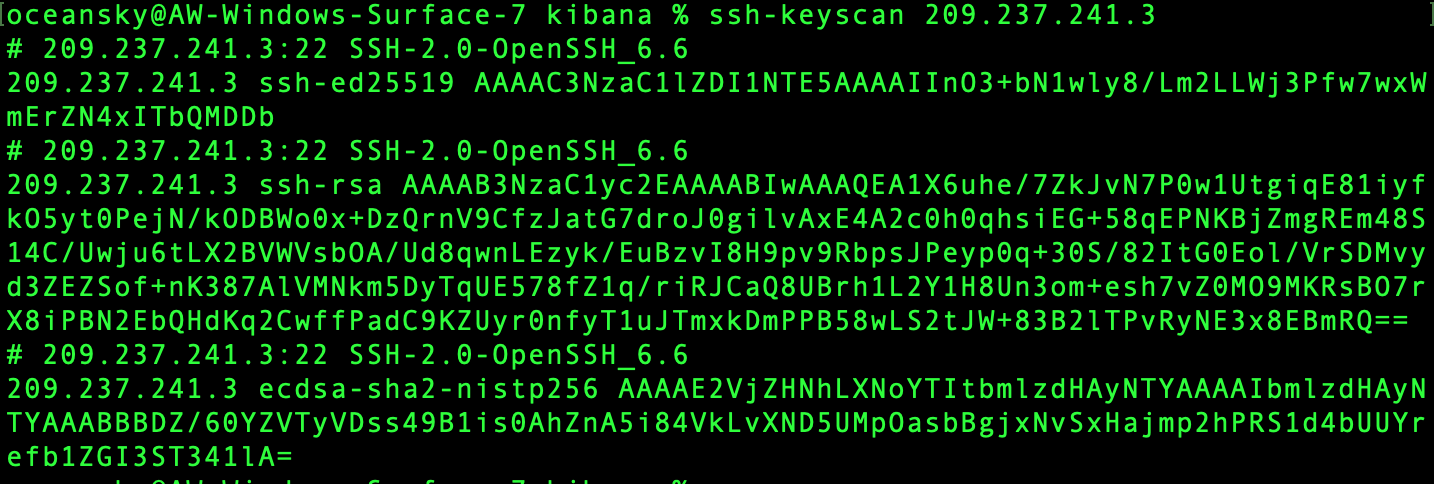
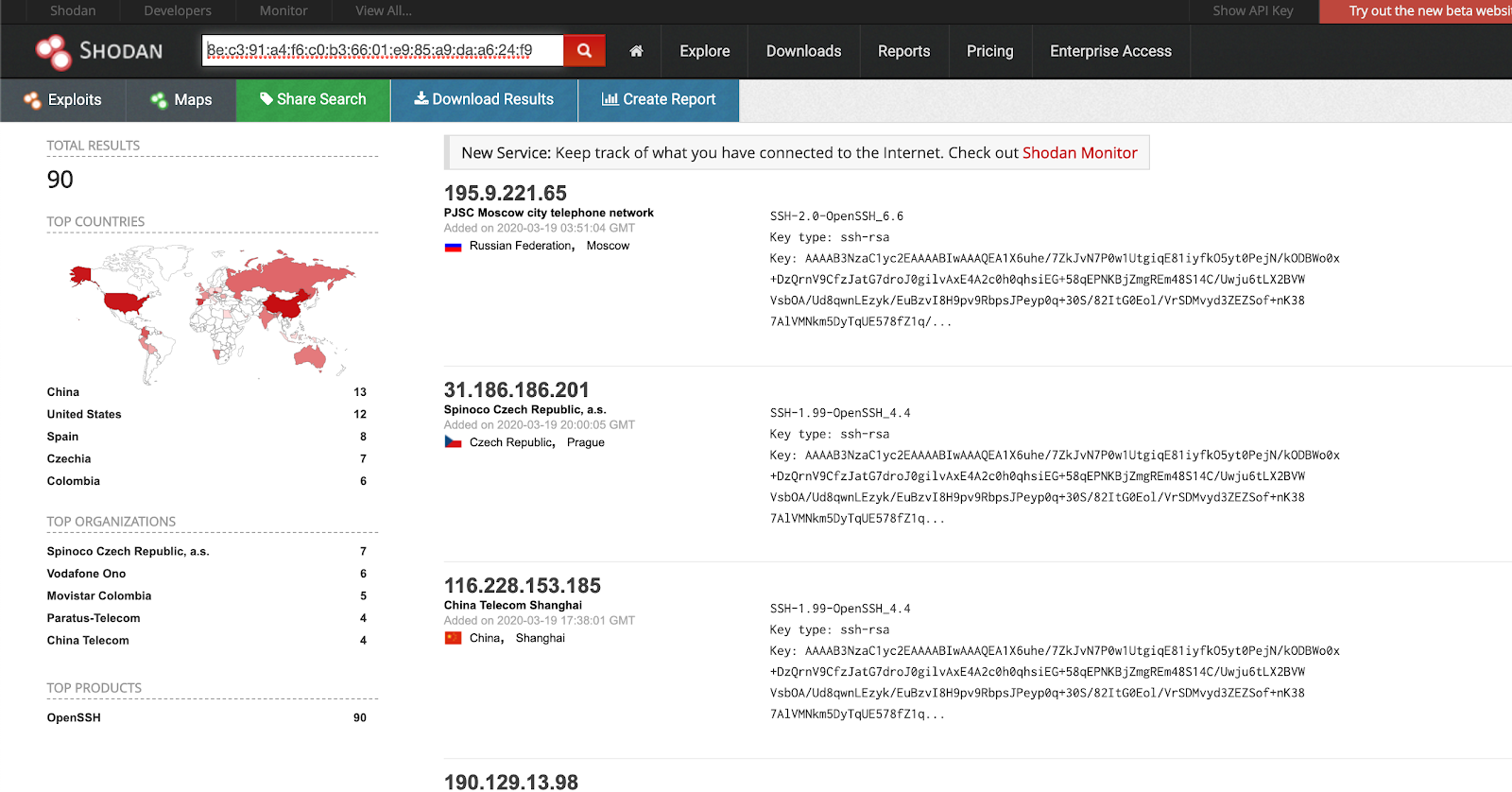
Now let us run the hassh fingerprint through Shodan. Since Shodan actively scans all open computers on the internet, it will tell us whether this fingerprint has appeared anywhere else.
The Ninety:
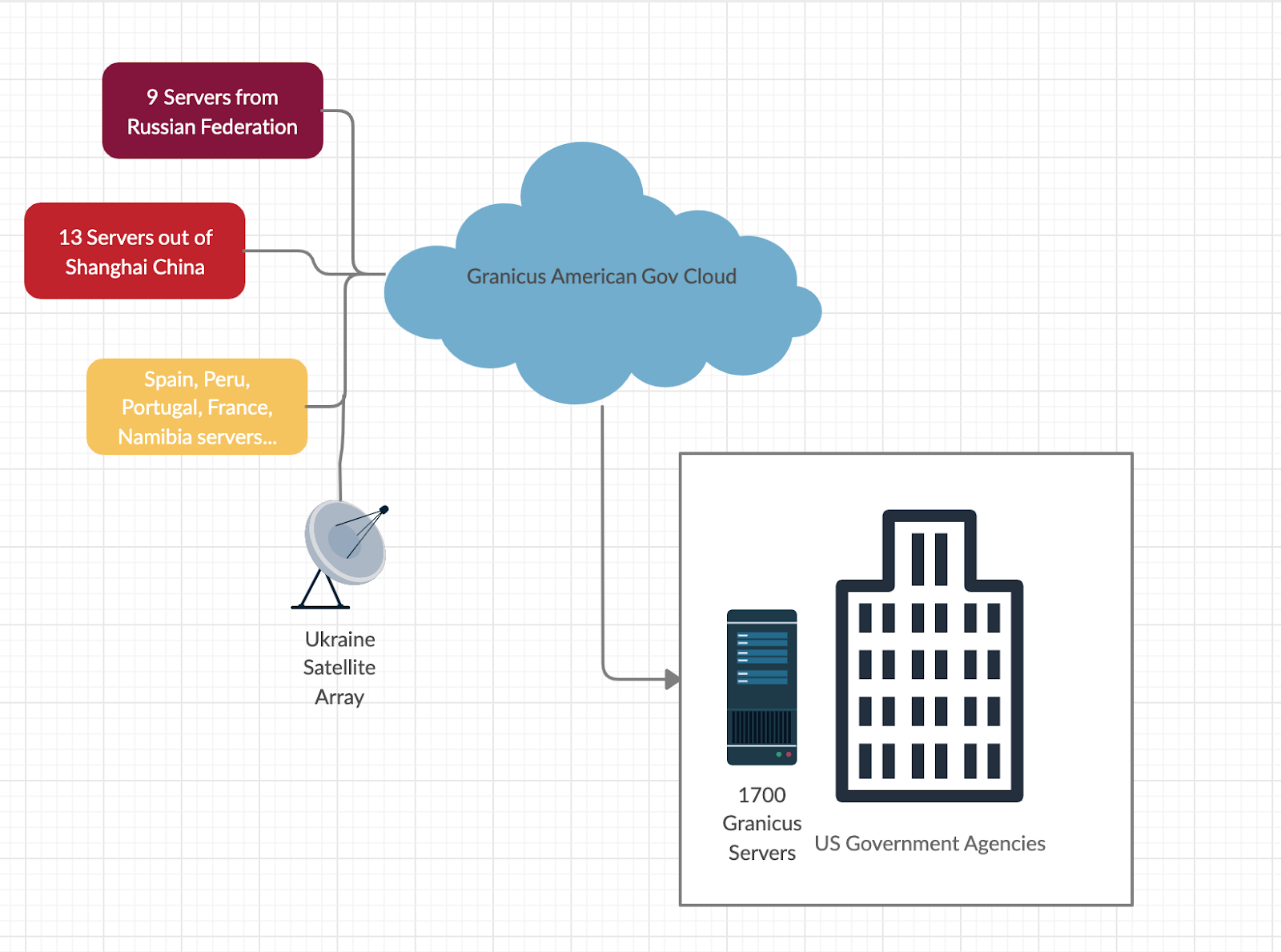
Ninety servers come back as of March 20th, 2020. They are scattered all across the world, and the majority are in China across nearly all provinces. Later I will show some of the networks in China are actively malicious.
Granicus only does business with governments in the United States, and very recently, the UK. These servers should not exist, and no one can account for them. These servers have a direct link, that can bypass most - and sometimes all - of the layers put up to protect a majority of United States government agencies and departments. Granicus has a broad portfolio across local, state, and federal organizations so the reach is quite significant.
These servers should be investigated, and Granicus should likely seek the help of the FBI within the coming days as a potential victim.
Second Verification:
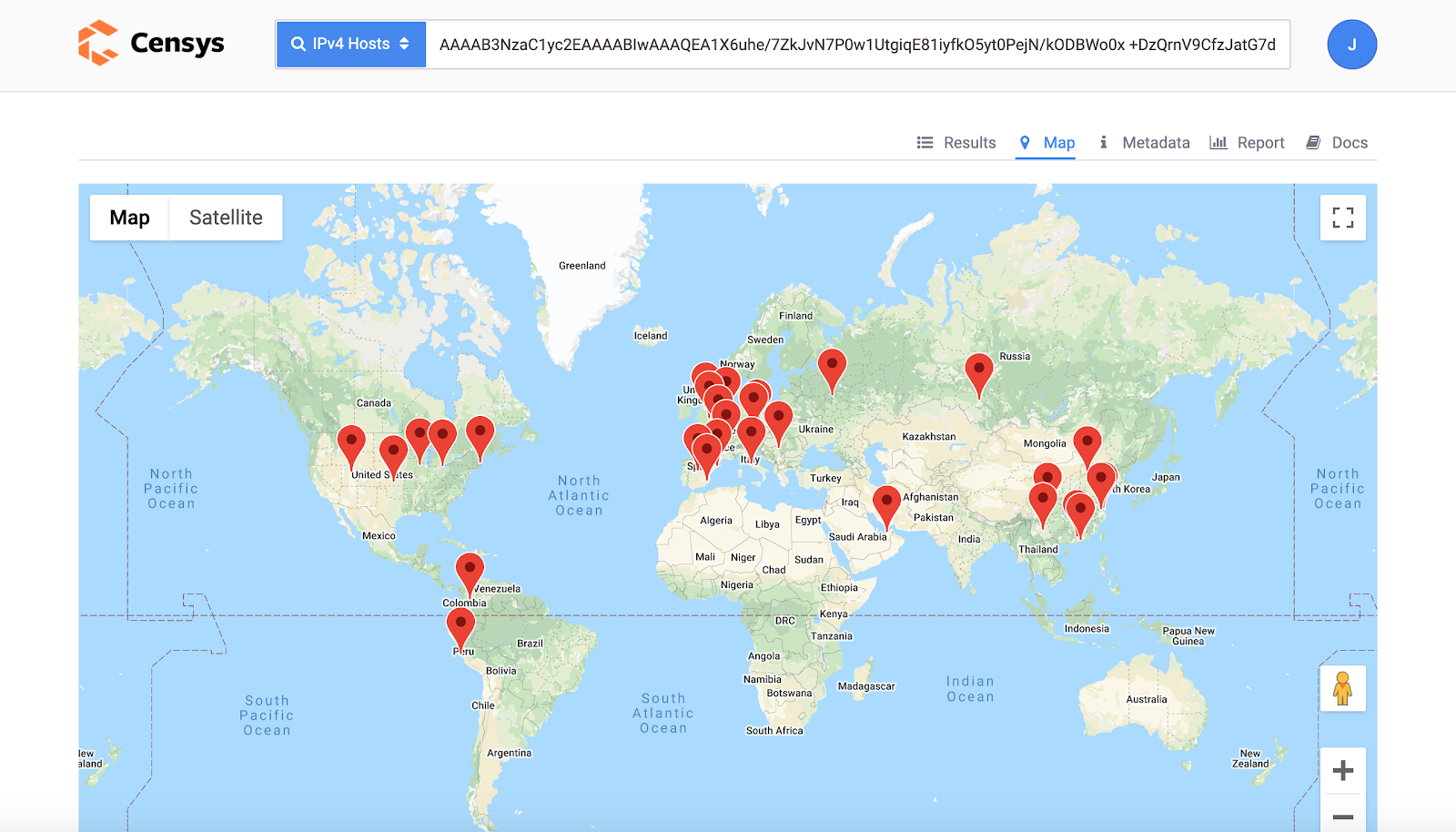
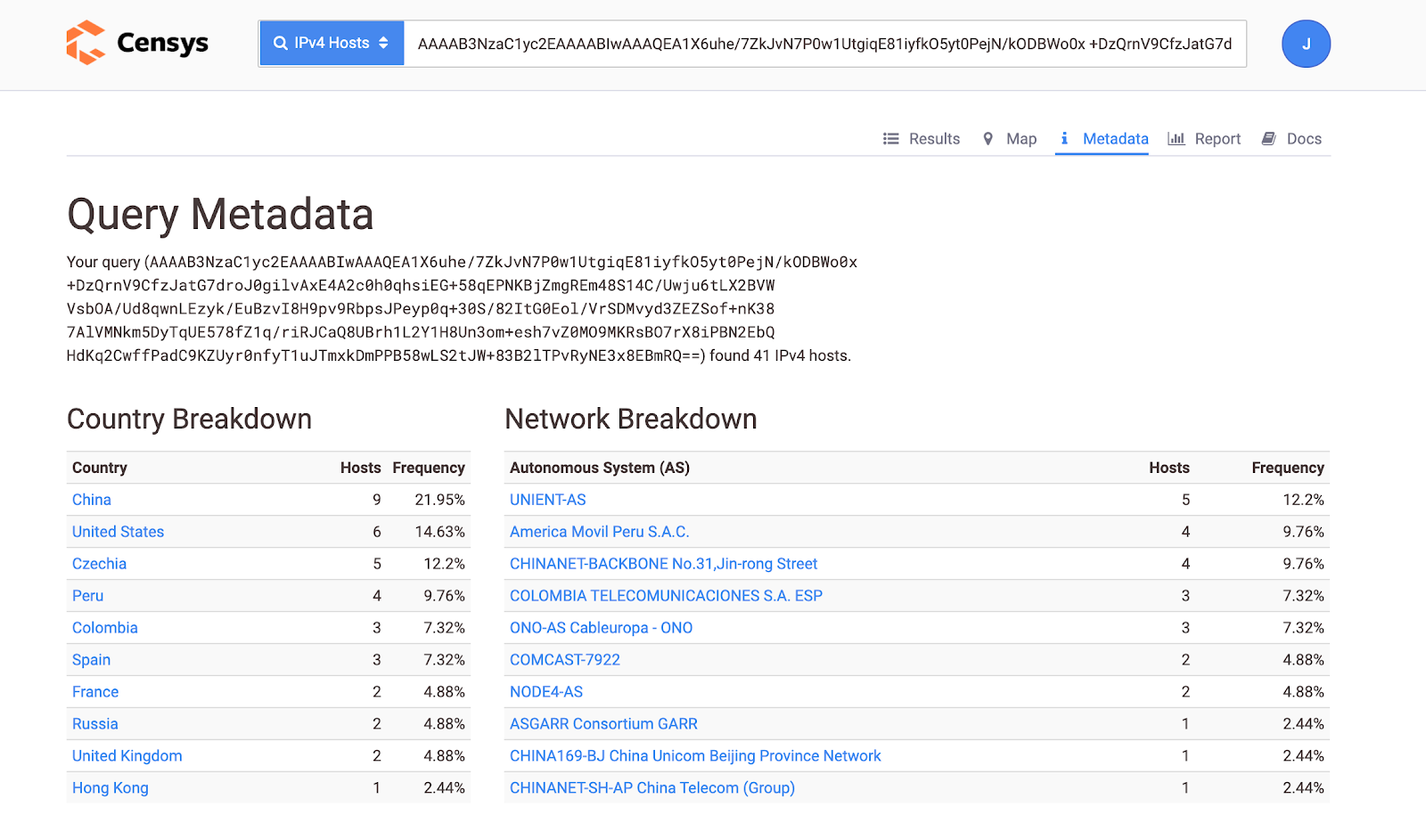
Proving the data even more, we can, using similar fingerprinting techniques, produce a similar set of servers via Censys.io as seen below. The SSH public key being used here is:
AAAAB3NzaC1yc2EAAAABIwAAAQEA1X6uhe/7ZkJvN7P0w1UtgiqE81iyfkO5yt0PejN/kODBWo0x+DzQrnV9CfzJatG7droJ0gilvAxE4A2c0h0qhsiEG+58qEPNKBjZmgREm48S14C/Uwju6tLX2BVWVsbOA/Ud8qwnLEzyk/EuBzvI8H9pv9RbpsJPeyp0q+30S/82ItG0Eol/VrSDMvyd3ZEZSof+nK387AlVMNkm5DyTqUE578fZ1q/riRJCaQ8UBrh1L2Y1H8Un3om+esh7vZ0MO9MKRsBO7rX8iPBN2EbQHdKq2CwffPadC9KZUyr0nfyT1uJTmxkDmPPB58wLS2tJW+83B2lTPvRyNE3x8EBmRQ==
Third Verification:
For a third time we can verify and see the seriousness of the data. If we run the original fingerprint through BinaryEdge, we get actually 103 total distinct servers scattered across the world. The higher number here is due in part to the fact that BinaryEdge scans the IPv6 address space:
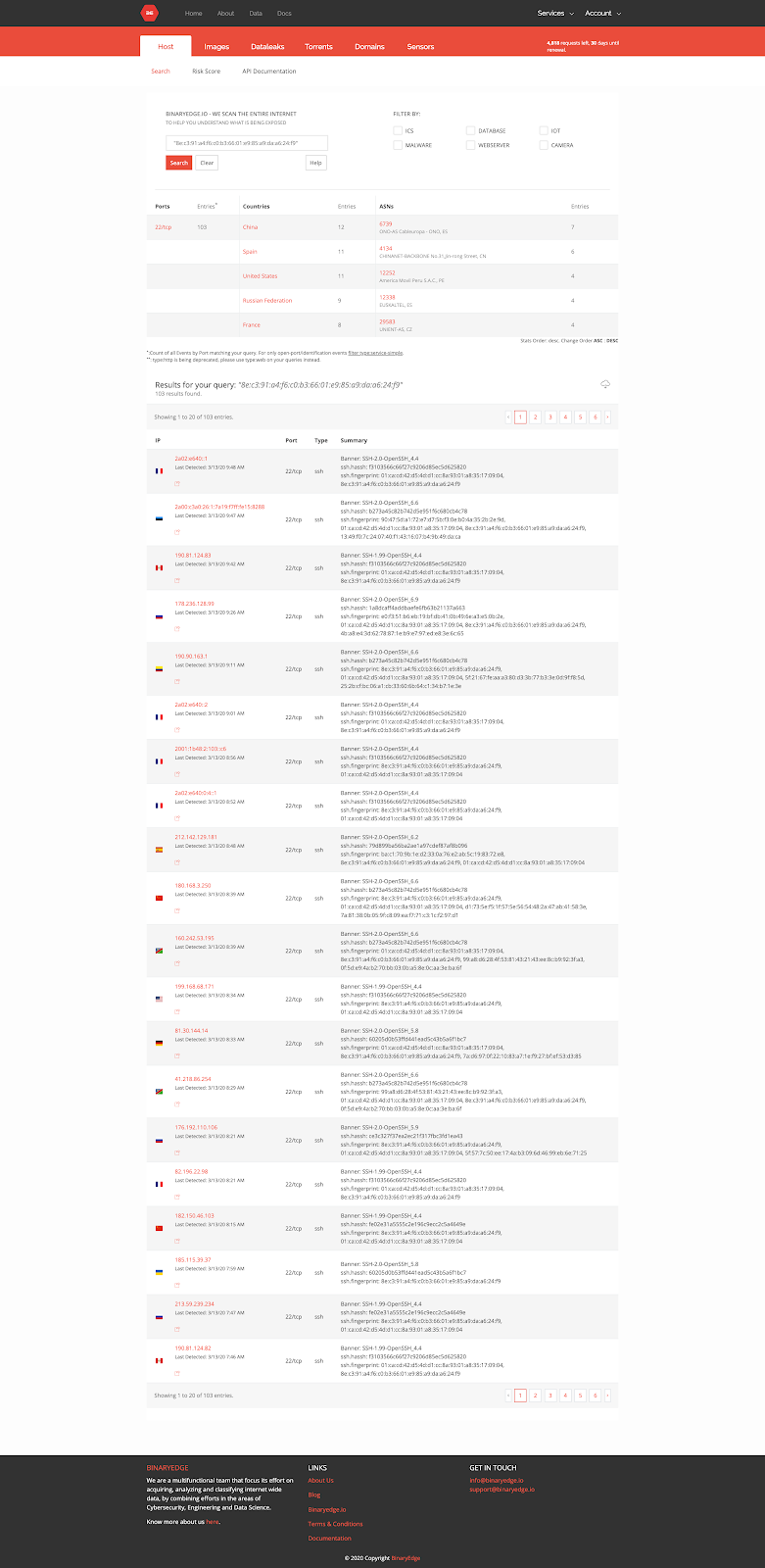
The Chinese networks I think are the most concerning simply because that is where the most foreign servers that came up were located. A breakdown of the various networks is below:

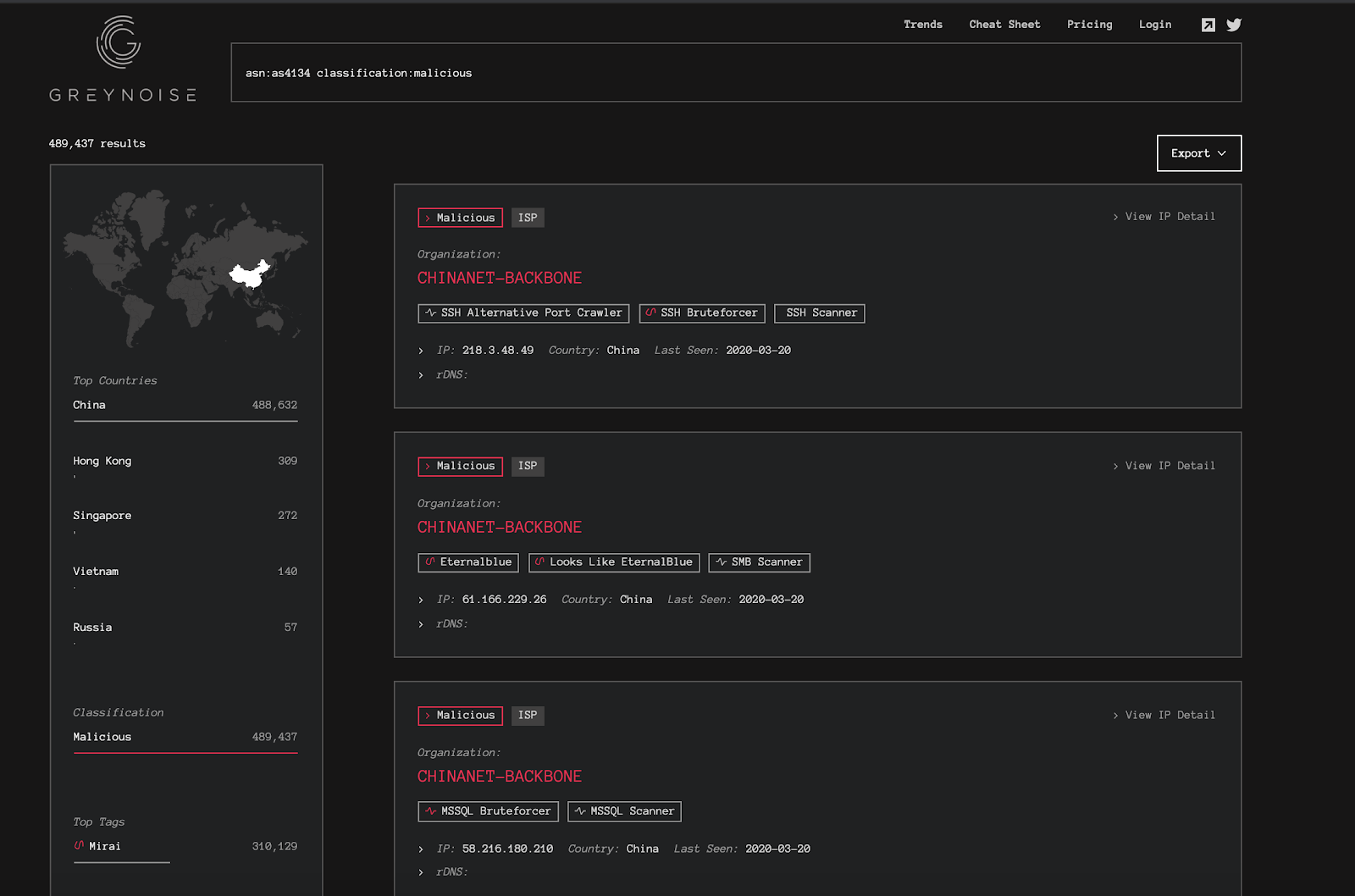
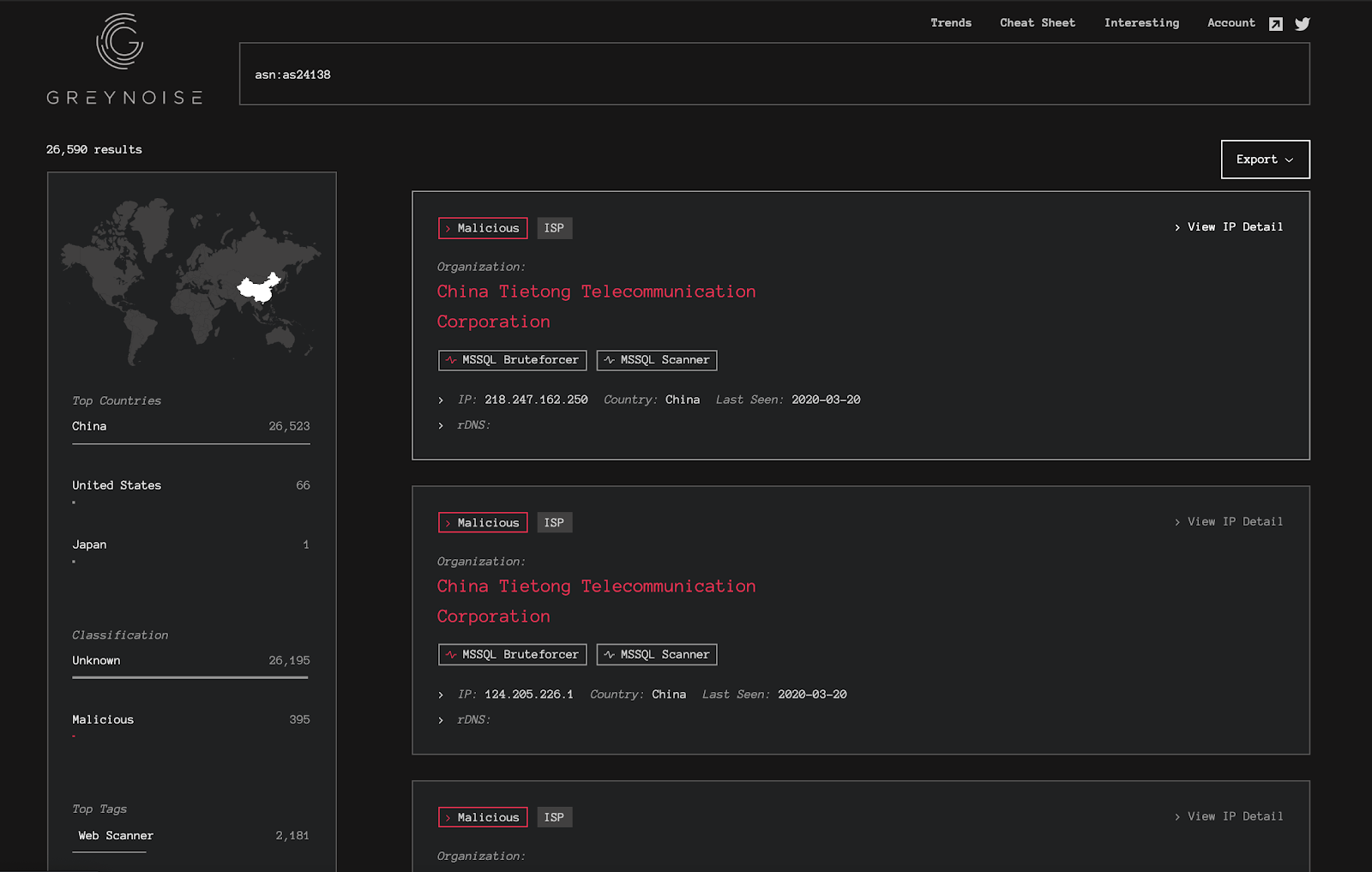
This is extremely concerning because if we look up some of those networks such as ASN 4134 or ASN 24138 we find they are labeled as malicious via Greynoise:
This issue would likely take several hours to solve. It would save perhaps 3-4 weeks, or thousands of hours of recovery time, in actual cyber conflict. It would be easy to make the case for longer. Right now though American government networks, actually do very much look like this cartoon in the abstract.
Out There:
I am not sure. Why do 90 random servers, sitting out on the public internet, share the same exact access key token that only servers allowed to officially access and provide support to US government agencies should have. Who created these servers? What is there plan? Why do they keep funding this infrastructure?
from Hacker News https://ift.tt/2vC43fJ

No comments:
Post a Comment
Note: Only a member of this blog may post a comment.