Tuesday, June 28, 2022

A Chinese woman wrote millions of words of fake Wikipedia history

Yifan, a fantasy novelist, was browsing Chinese Wikipedia looking for inspiration in history, when he first learned of the great silver mine of Kashen. Originally opened by the principality of Tver, an independent state from the 13th to 15th centuries, it grew to be one of the world’s biggest, a city-sized early modern industry worked by some 30,000 slaves and 10,000 freedmen. Its fabulous wealth made it a vital resource to the princes of Tver, but also tempted the powerful dukes of Moscow, who attempted to seize the mine in a series of wars that sprawled across the land that is now Russia from 1305 to 1485. “After the fall of the Principality of Tver, it continued to be mined by the Grand Duchy of Moscow and its successor regime until the mine was closed in the mid-18th century due to being exhausted,” the entry said.

Yifan went down the rabbit hole on Kashen and the Tver-Moscow War, learning about battles, the personalities of aristocrats and engineers, and more history surrounding the forgotten mine. There were hundreds of related articles describing this obscure period of Slavic history in the dull, sometimes suggestive, tone of the online encyclopedia.

The Chinese-language Wikipedia entry on the “Tver-Moscow War” edited by Zhemao, has been deleted. From Wikipedia

The Chinese-language Wikipedia entry on the “Tver-Moscow War” edited by Zhemao, has been deleted. From Wikipedia

It was only when he tried to go deeper that something started to seem off. Russian-language versions of articles related to the period were shorter than the Chinese equivalents, or nonexistent. The footnote supporting a passage on medieval mining methods referred to an academic paper on automated mining in the 21st century. Eventually, he realized that there was no such thing as the Kashen silver mine. Yifan had uncovered one of the largest hoaxes in Wikipedia’s history.

“Chinese Wikipedia entries that are more detailed than English Wikipedia and even Russian Wikipedia are all over the place,” Yifan wrote on Zhihu, a Quora-like Q&A platform. “Characters that don’t exist in the English-Russian Wiki appear in the Chinese Wiki, and these characters are mixed together with real historical figures so that there’s no telling the real from the fake. Even a lengthy Moscow-Tver war revolves around the non-existent Kashen silver mine.”

An investigation by Wikipedia found that a contributor had used at least four “puppet accounts” to falsify the history of the Qing Dynasty and the history of Russia since 2010. Each of the four accounts lent the others credibility. All have now been banned from Chinese Wikipedia.

Over more than 10 years, the author wrote several million words of fake Russian history, creating 206 articles and contributing to hundreds more. She imagined richly detailed war stories and economic histories, and wove them into real events in language boring enough to fit seamlessly into the encyclopedia. Some netizens are calling her China’s Borges.

She’s come to be known as “Zhemao,” after one of her aliases. According to a now-deleted profile, Zhemao was the daughter of a diplomat stationed in Russia, has a degree in Russian history, and became a Russian citizen after marrying a Russian.

She began her career in fictional history in 2010, creating articles with false stories related to the real figure of Heshen, a famously corrupt Qing Dynasty official. She turned her attention to Russian history in 2012, editing existing articles on Czar Alexander I of Russia. From there, she gradually spread fabricated stories throughout Chinese Wikipedia’s coverage of Russian history. She used a real, and often bloody, rivalry between the two early Slavic states as a basis for an elaborate fiction, mixing research with fantasy.

A map made by Zhemao, now deleted from Wikipedia. From Wikipedia

A map made by Zhemao, now deleted from Wikipedia. From Wikipedia

Zhemao published an apology letter on her English Wikipedia account, writing that her motivation was to learn about history. She also wrote that she is in fact a full-time housewife with only a high-school degree.

Zhemao said she made most of her fake entries to fill the gaps left by her first couple of entries she edited. “As the saying goes, in order to tell a lie, you must tell more lies. I was reluctant to delete the hundreds of thousands of words I wrote, but as a result, I wound up losing millions of words, and a circle of academic friends collapsed,” she wrote. “The trouble I’ve caused is hard to make up for, so maybe a permanent ban is the only option. My current knowledge is not enough to make a living, so in the future I will learn a craft, work honestly, and not do nebulous things like this any more.”

While some Wikipedia editors warned that the incident had “shaken the credibility of the current Chinese Wikipedia as a whole,” most netizens praised Zhemao’s talent and persistence, encouraging her to publish a novel in future.

“It is really awesome to invent a self-contained historical logic with details like all kinds of clothing, money, and utensils,” one user wrote on the microblogging platform Weibo.

As of June 17, most of the fictitious historical entries created by Zhemao on Chinese Wikipedia have been deleted, according to an official statement. A few entries have been improved by other contributors and thus remain. Zhemao’s edits on other existing entries have been withdrawn, the platform wrote.

Neither Zhemao nor the Wikimedia Foundation, which operates Wikipedia, replied to requests for comment by press time.

“This group of accounts have done their sabotage for a long time, so there may still be affected entries, and related false information may have spread to other platforms,” the notice said.

Editor: David Cohen.

(Header image: Illustrations from ‘The Illustrated Chronicle of Ivan the Terrible,’ Book 7: 1290-1342. Courtesy of runivers.ru)


from Hacker News https://ift.tt/Wb12xKy

Ask HN: Has your total compensation drastically changed with the stock downturn?

Comments

from Hacker News https://ift.tt/nfgWZ47

The Modos Paper Monitor

At Modos, our mission is to help you live a healthy life by creating technology that respects your time, attention, and well-being. We are an open-hardware and open-source company, and are building an ecosystem of devices to re-imagine personal computing and build a collective vision of calm, intentional, and humane technology.

Today, we'd like to introduce the Modos Paper Monitor: an open-hardware standalone portable monitor made for reading and writing, especially for people who need to stare at the display for a long time.

Specifications

  1. 13.3” 1600x1200 Eink panel without front lighting
  2. DisplayPort 1.2 input, up to 224MP/s with a potential to support 2200x1650 resolution panel at 60Hz
  3. MicroUSB power input (consumes 1.5W~2W continuously)

*In time, we will offer a single USB Type-C connection from the PC to the monitor for data and power and provide adapter options for machines without Type-C connectivity.

Our Eink monitor and competitors

There is currently no universally good way to drive the screen, this is due to the technical limitations of Eink technology. As a result, different display driving strategies/modes were designed to address different use cases.

Typically on Eink monitors, one would see multiple modes: text mode, graphics mode, video mode, etc.

However, we think the solutions offered by existing Eink monitors have several drawbacks.

Eink modes

Eink monitors on the market today typically offer the following modes:

  1. Normal mode: 1-bit + dithering, ~10fps. Dithering range is reduced to produce cleaner white/ black.
  2. Video mode: 1-bit + dithering, ~15fps. Contrast ratio is reduced to increase frame rate.
  3. Text mode: 1-bit without dithering, ~10fps. Produce cleaner text edges for reading and typing.
  4. Slideshow mode: 4-bit (16 level), ~3fps. Offers great image quality, but generally unusable for many applications.

The modes in the market today have several issues:

  1. The latency is a bit too high for interactive use, like moving the mouse cursor or picking a word from the input method window if you are typing, for example, Chinese or Japanese.
  2. There are essentially no greyscale modes for typing, so texts are not antialiased. The text mode is arguably better than normal / video mode with dithering, but it's aesthetically not pleasing and still difficult to read.
  3. All existing products use error-diffusion dithering as they yield the best result for displaying images. However, the downside is that moving objects would introduce transitions on static pixels. For example, if I move the mouse cursor, the entire rectangular region right to and lower than the cursor would need to be updated. In our opinion, this is distracting at the very least.

Latency

The entire presentation latency can be broken down into parts:

  1. The PC processes a keystroke and renders the text, and the rendered text is sent to the screen.
  2. The screen controller processes the image and issues an update to the Eink panel.
  3. The Eink panel responds to the input, and the pixel changes color.

To solve these issues, we have the following proposed solutions.

Competitor's offerings

  1. The controller typically runs at 30Hz with a delay between 0-33ms.
  2. The controller buffers the entire frame before processing, adding around 33ms delay.
  3. A new update couldn’t start until the previous one has finished.

For example: Imagine you type 2 letters, and before the 2nd one is displayed, the controller starts updating the 1st one. Now the controller needs to wait for the first one to finish updating before starting displaying the 2nd one. This introduces a worst-case delay of ~100ms.

Similar to the previous case, if a letter is being typed but then deleted because the current update blocks all pending updates, it won’t erase the letter unless it’s fully displayed.

Our Paper Monitor

To optimize the latency, we implemented the following measures:

  1. The controller runs at a 60Hz refresh rate; this means on PC, in the ideal case, the delay is between 0-17ms.
  2. The controller only buffers a few pixels before processing, effectively reducing the processing delay to nearly 0.
  3. Each pixel has its update timer. Updating the 1st letter wouldn’t block the 2nd letter.
  4. Pixel update request supports early abortion: if the input pixel is changed during the update process, it would cancel the current update and recalculate the timer to drive it towards a new value.

With these measures combined, our controller achieves:

a consistent < 120ms latency, compared to competitors, up to 270ms latency.

Grayscale

We don’t have a universal solution for the grayscale issue that works for all. We do have a simple solution that works for typing.

The display is always refreshed to 1-bit mode first, then drives to 2-bit / 4-level greyscale after a preset time (for example, around 200ms). The process is non-flashing. This allows smooth typing while maintaining greyscale antialiasing for texts on the screen.

We are also planning to implement a 16-level greyscale mode with similar logic, but the 16-level will be flashing. Flashing/ flickering causes distraction and won’t work well for typing, but it could be useful for reading.

For the error-diffusion issue, we are evaluating using simpler dithering methods such as patterned dithering that would generate an image with arguably worse quality but could be more pleasant / causes less distraction when in typical desktop use.

Color

In the future, we would also love to explore options of using color screens. There are two major methods of generating color on Eink and similar screens.

One is to use an RGB color filter array (CFA) in front of a monochrome panel to create color, similar to a color LCD. This allows the same driving logic for monochrome panels to carry over and would have similar response time/refresh rate/ghosting characteristics. The major drawback is the screen would be much darker, as the CFA only allows the light of certain colors to pass through.

Another is to use CMY color pigments inside a single pixel (called ACeP), similar to a color print. This results in much-improved reflectivity compared to CFA solutions, but the downside is increased response time, up to 30 seconds on 1st generation ACeP screens and 1 second on 2nd generation ACeP screens.

On paper, neither of the two technologies is suitable or ready for use on a monitor. If we can acquire screen samples, we might be able to do some testing and maybe provide a color option for purchase for those who do need color.

Native e-ink optimized applications

We would also like to develop a protocol for applications to send hints across the window compositor to the screen controller to change the modes based on the use. This is possible and used on eReaders, so texts, images, and UI elements could use different update modes, but not with the current available Eink monitor + software stack. Our controller supports per-pixel update mode settings, but this would need support from the software side.

Community Survey and Pilot Program

We are in the process of securing funding for our pilot program, building prototypes for its participants, and continuing the work needed to bring devices like our Paper Monitor to the market. We need your support and want to hear from you.

If you believe in our mission of building technology that respects your time, attention, and well-being, please fill out our community survey and apply for our community pilot program to help us make this a reality.‍

We need at least 50,000 people interested in purchasing our Paper Laptop, Paper Monitor, Development board, and future devices we have planned for the ecosystem.

- Participate in our Community Survey

- Apply for Community Pilot Program

‍

Follow our progress on RSS, Github, Matrix, Mastodon, and Twitter, or Get in touch with us.

‍

Regards,
The Modos Team


from Hacker News https://ift.tt/FKeMnku

Leetcode Considered Harmful

I'm trying to release the Quick Bit articles as fast and frequently as possible. For that reason I publish incomplete articles as public drafts. In that case its status will be: In Progress. I hope to showcase the interesting topics I'm thinking about this way and receive feedback in the comments so I can better prioritize finishing and refining them.


from Hacker News https://ift.tt/umUx8cN

Are big tech getting too judgemental?

Decisions, Decisions

A few days ago I was at a meet-up in Santa Clara. This was my first meet-up since the start of the pandemic, and while the concern for COVID still lingers, it was a great way to get back out into society since the pandemic began. One conversation in particular sparked an interesting debate.

At the meetup, a woman and I struck up a conversation about privacy. I believe she works for WhatsApp. While she did not explicitly confirm this, based on our conversation, it was fairly easy to guess.

The crux of the matter was presented as follows: Would you still value your privacy if we were working on an algorithm that detects scammers? The sort of technology needed to do so requires data analysis, and the company would need to read your conversation in order to obtain proper data sets.

At first, I thought she presented a valid point. Who would actually want to get scammed? Certainly not me.

However, after giving it some more thought, a counterargument came to me: who are they to determine who is a scammer? Who gave them authority to label someone as such, and what are the parameters for such a decision? If you label someone wrongfully as a scam artist, who will shoulder the responsibility for consequent byproducts of such labeling?

Not long ago, Donald Trump’s Twitter account was banned. We won’t get into the nitty-gritty of politics here. He wasn’t the first user banned, nor will he be the last. However, the question stands: what authority does a social media site like Twitter have to provide judgment before a court of law is able to? Our legal system is responsible for determining shameful acts of attacking the temple of democracy, is it not? Why then would we let the onus fall on social media companies to do the legwork? It could be argued that targeted advertising is a slippery slope that leads to disinformation. This invites a discussion into what responsibilities ultimately fall onto social media sites when it comes to regulating user access.

Responsibilities

With the expanded prevalence of how much we share on social media channels, one person’s bad day could turn into a life-long ban from a social media service. Conversely, repeat offenders continue to do what they want, when they want. Wouldn’t that be classified as a failure on behalf of the social media company that claims they are doing the right thing?

Remember Logan Paul? For the uninitiated, he is a social media personality with millions of YouTube subscribers. While his popularity and channel remain intact, he’s been under fire for some problematic content in the past. Regardless of his questionable content, he continues to make millions in revenue from YouTube with no impact to his overall business. On the other end of the YouTube spectrum, a woman who narrates sleep stories for adults in her own soothing voice is told that her work is not original enough and thus cannot monetize her business. (Reference video for example https://www.youtube.com/watch?v=qdDVHyJDaFs). She was notified out of the blue that her videos would be demonetized without any prior warning.

When looking at the above examples relating to content creators, the chasm between the content they provide couldn’t be more different. Yet, one creator had the rug pulled right out from under her. What sort of parameters did YouTube abide by in order to come to that determination? In this case of a woman who creates and narrates sleep stories, the reasoning seemed vague, if not altogether illogical.

Exercising Power

Users get banned on social media sites frequently, generally without much fanfare. When it came to Donald Trump’s exit from Twitter’s social platform, a common question arose: how far is too far when companies that hold power exercise said power in shaping what their users see?

Bringing back the question of privacy and scammers, companies would need to decide what constitutes a scam, what parameters would look like when searching for scammers, and how to implement limits on users without invading privacy.

The nuances of each step call into question how companies could legally make such assessments. Implementation of such practices would need to include enough oversight so as not to compromise user privacy.

The banning of certain high-profile figures has been discussed at length. When it comes to general users and public perception, companies would need to provide more transparency as to what practices would look like in terms of identifying online scammers. Yet, the question remains nuanced as to who has authority over classifying who a scammer is. A different, but adjacent, question might be: how much should social media sites regulate misinformation and disinformation?

Alternately, social media sites can work in tandem with government entities to protect people online while still retaining best privacy practices. Unfortunately, scam artists have an extremely prevalent presence online. Scammers can target credit card data and personal information through social media. All of this can lead to financial losses and even identity theft.

Transparency is Key

However, the question isn’t how much harm a scammer can do. It’s well known that scam artists can access information discreetly and disappear once they have what they need. When talking of privacy, if a company operates under the guise of protecting consumers, they can seemingly remove perfectly acceptable accounts. Such was the case with the woman simply creating sleep stories for people who have trouble falling asleep.

Platforms should be focusing on transparency in order to build consumer trust. Furthermore, platforms should be willing to protect consumers without compromising their privacy. It’s a tricky balance to find, and one that requires continual discussion if we are to hold companies accountable for how much power they are able to wield in the digital space.


from Hacker News https://ift.tt/9TB0YDO

Monday, June 27, 2022

Ancient Authentication and Integrity Checking

Authentication and integrity mechanisms have been in use for thousands of years! One of those methods was the wax seal, with references as early as the Pharaohs in ancient Egypt.

The wax seal was designed to serve two purposes:

Signature/Author Verification (Authentication)

Ancient Times

The first was to verify that the document came from the person mentioned. Seals, typically in the form of a Signet Ring, were unique to the owner and destroyed when the owner died. Just as a private key, the ring would never leave the owner’s presence and only the owner would use the ring. Technically, the ring could be forged, but I’m guessing there would be a high price to pay for the forger if they were caught! Learn more about the modern resurgence here.

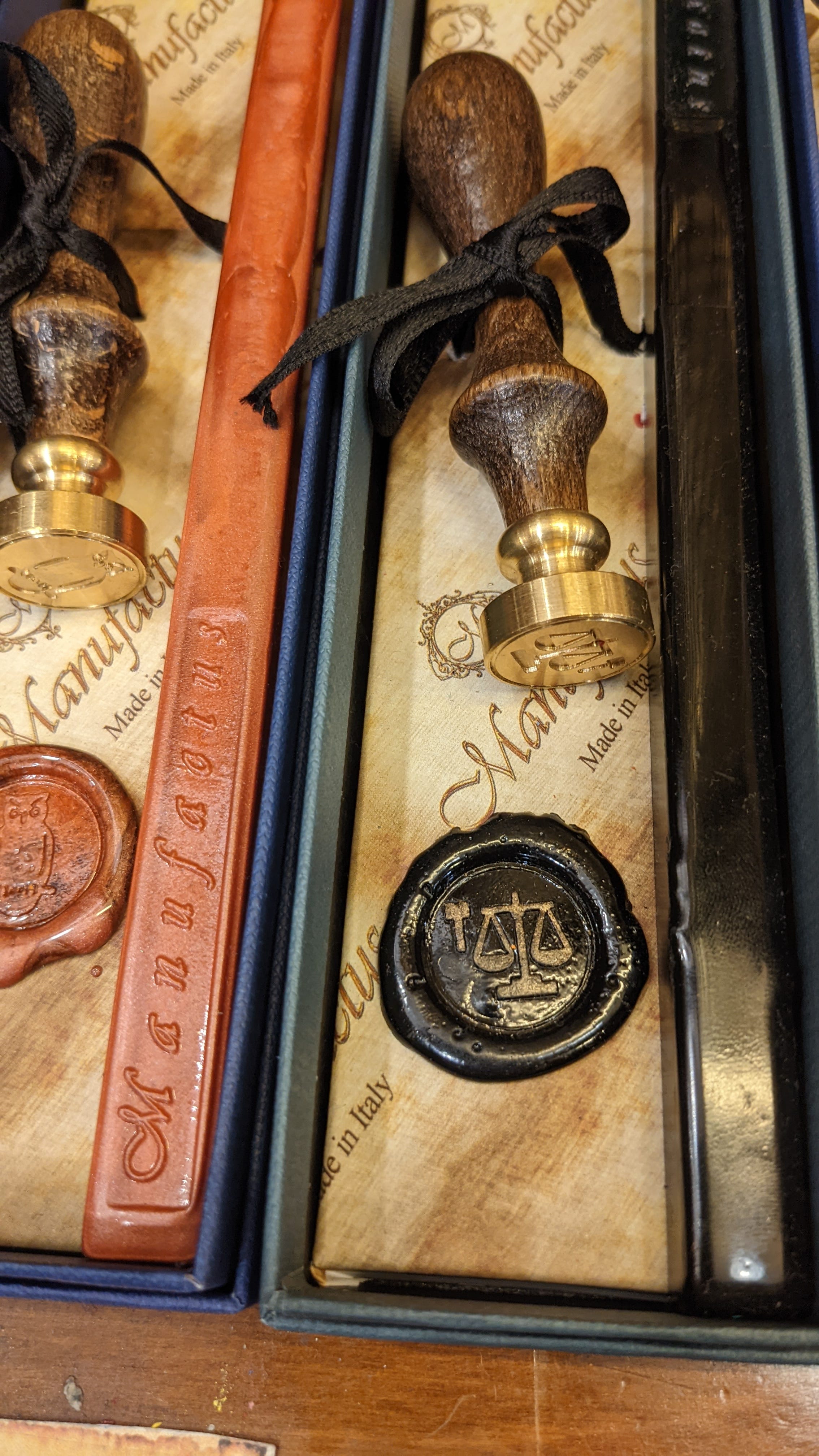
An actual wax seal kit in Italy.

The physical seal is still in use today for company formation documents, birth certificates, and other official documents.

Electronic Signature and Verification

One modern example of this is Git Commit Signing, where a developer signs a commit with their private key and it is verified by an external entity with their public key. See here for a more detailed explanation.

Document Integrity

Ancient Version

The second purpose of the seal was to signify integrity of the document. An unbroken seal on an envelope meant that the contents of the document were not altered. The wax itself was melted on the envelope and should break should there be any signs of tampering of the contents.

By User:Contrafool, CC BY-SA 3.0, https://ift.tt/qnWmfPQ

Note: I highly recommend attending the Tamper Evident village at Defcon where possible. They have a contest every year to see how far a team can get past many “tamper evident” seals on packages in use today.

Electronic Integrity Verification

Integrity verification comes in a variety of forms today, but one of the most common forms is the use of the hash. Not to be confused with “encryption”, which is a two way operation, the hash function is a one-way operation on a piece of data that outputs unique information based on the input data. It’s supposed to be “strong” enough that it would be hard to replicate.

For example, MD5 is an algorithm that is no longer in favor for high security integrity checking, but can be used for verifying the download of a file such as an ISO or Zip file.

The equivalent of integrity checking in the digital world would be generating a hash of the document. Digitally signing the hash would then provide authenticity that you are the person that generated the hash.

Summary - Software Supply Chain Security

I would be amiss for not mentioning the importance of digital signatures and integrity checking in the modern enterprise. From the verification of code updates by 3rd party companies to digital signatures of Git commits from developers (1st and 3rd party) to verification of people during the onboarding process, there is no shortage of injection points where strong authentication or integrity checking is needed.

caption...

As always, conducting frequent threat modeling exercises is important to help understand and prioritize where security is needed in your environment.


from Hacker News https://ift.tt/ZM1SOiW

Labrador's robotic shelf for people with mobility issues

Most home robots unveiled at CES tend to over-promise and under-deliver. Every year, we’re treated to staged demos of prototype “robot butlers” that always fail to materialize as real products. But two new bots created by a startup named Labrador Systems look like they’ll break this cycle. Why? Because the company has kept things simple — extremely simple — by building what are essentially self-driving shelves.

Labrador’s robots, named Caddie and Retriever, are designed to help around the house by ferrying goods. They’re both about the size of a side-table and come equipped with wheels and sensors that let them navigate your home. Owners will set a number of “bus-stops” for the machines (e.g. “in the kitchen” and “by the couch”) and the robots will move between these locations on command, automatically steering around obstacles and people. Both bots can be directed by apps or using verbal commands via an Alexa integration.

The robots’ max load is 25 pounds, or around 11 kilograms. They move at a steady walking pace and recharge themselves automatically overnight. The big difference between the two machines is that Retriever can raise and lower itself and has a pair of conveyor-belt like arms that lets it grab trays (if they’ve been placed in a suitable location). But the selling point for both is the same: “move stuff from A to B.”

The Caddie and Retriever robots can carry up to 25lbs (11kg).
Image: Labrador Systems

Although the robots could be useful to anyone, they’re designed primarily to help people with mobility problems; the elderly, and individuals with chronic conditions like Parkinson’s or arthritis. Mike Dooley, CEO of Labrador, says he was inspired to develop them after seeing his own mother move from walking unaided, to using a cane, to a wheelchair.

“I noticed when she was using the walker or the cane, her hands were becoming her extra pair of legs. She didn’t have them free any more,” Dooley tells The Verge. In such a scenario, he says, a robot like Caddie could be incredibly useful just by assisting with simple tasks: moving washing to the laundry, dirty plates to the kitchen, or a book and a pair of glasses to the couch.

Dooley says his mother is now “90 years old and still around, but she’s full time in a wheelchair or a hospital bed and getting caregivers twice a day.” In this scenario, Labrador’s Retriever robot might help out by not only moving items around, but grabbing trays with useful items from tables and cabinets.

In a live-streamed demo, I saw the Retriever robot wheel itself up to a fridge which had been retrofitted with motors on its door. The fridge swung open and the robot used its arms to slide a tray out from a shelf in the refrigerator and carry it over to another location. Dooley says Labrador will offer this sort of retrofitted set-up to customers, allowing them to create routines that offer extra independence to those who need regular care.

“A caregiver could be there in the morning, and set up stuff so that somebody has good quality of life when they’re gone,” says Dooley. He gives the example of placing a lunchtime meal in a refrigerator that Retriever can then fetch in response to a voice command.

The machines’ simplicity of purpose is informed by Dooley’s experience in the world of robotics. He was previously the first product manager for Lego Mindstorms, the company’s hugely popular toy robot kit. “My charter was to sell 10 to 15,000 units of that kit, and we ended up doing over a million,” he says. “That’s a claim to fame that really impresses six year olds.” After that he helped launch a robot swiffer named Mint, with the parent company then acquired by Roomba-creator iRobot, and the underlying tech becoming the foundation for its Braava range of mops.

This work showed him the benefits of keeping robots simple by narrowing down their functionality. Many home robots fail before they’ve even launched because they try to do too much, promising customers they’ll be emptying the dishwasher or vacuuming the carpet — tasks that are extremely challenging for machines to complete even within tightly-controlled lab conditions, let alone the ever-changing chaos of the average home.

Caddie and Retriever, by comparison, have fewer moving parts and are designed to work primarily along pre-set paths. Labrador Systems is exploring adding more open-ended functionality like manual control and “follow me” mode, but Dooley says the company is happier focusing on more constrained use-cases. “We have this simple mantra, of keeping it very controllable and very understandable,” he says. The machines also use off-the-shelf parts for navigation (mainly infrared and depth sensors — no lidar) and take advantage of recent advances in augmented reality to navigate users’ homes. “It’s the same tech that means you can have Pokémon look like they’re in your room, jumping around,” says Dooley.

Despite this simplicity, the machines aren’t yet ready for consumers to use. Introducing any automated system to the home is a difficult task (just think of all the ways Roombas can go wrong), and the pressing need to not make mistakes is even greater when the machines are designed to help those with mobility challenges. Labrador started conducting pilots of the Caddie robot last year, placing machines in people’s homes starting in February 2021. But the company is going to be conducting more tests, and only aims to be in full production of the machines “by the second half of 2023.”

Labrador’s robots could supplement the work of caregivers.
Image: Labrador Systems

Starting today, interested customers can put down a fully-refundable $250 deposit for a Caddie or Retriever unit. Prices for the machines will be $1500 upfront with 36-month payment plants. That’s $99 a month for Caddie and $149 a month for Retriever, giving total costs of $5,000 and $6,800 for the two machines. After payments have finished, customers will own the bots and be able to keep using their current functionality, but they’ll have to pay Labrador an as-yet-undecided fee for an extended warranty and new feature support.

In our interview, Dooley treads the line between confidence in the machines and humility regarding the difficulty of home automation. Many — if not most — new home robots fail, and few are as ambitious as Caddie and Retriever. But he says the experience with pilot users has been incredibly encouraging. “It’s an entirely new concept, but they say it’s almost like nothing to use it, in terms of thought — you just do it.”

And if the technology works out, it could be incredibly useful for those who can access it, helping the West’s aging population keep independent for longer, and reducing the burden on caregivers who do incredible and under-recognized work for so many.

“We’re not trying to hype this, because there’s way too much hype in robotics as it is,” says Dooley. “We really want to make something that has a practical impact, because if it does it can make a difference in people’s lives.”


Related:


from Hacker News https://ift.tt/L05P2ie